
Master Your Mindset
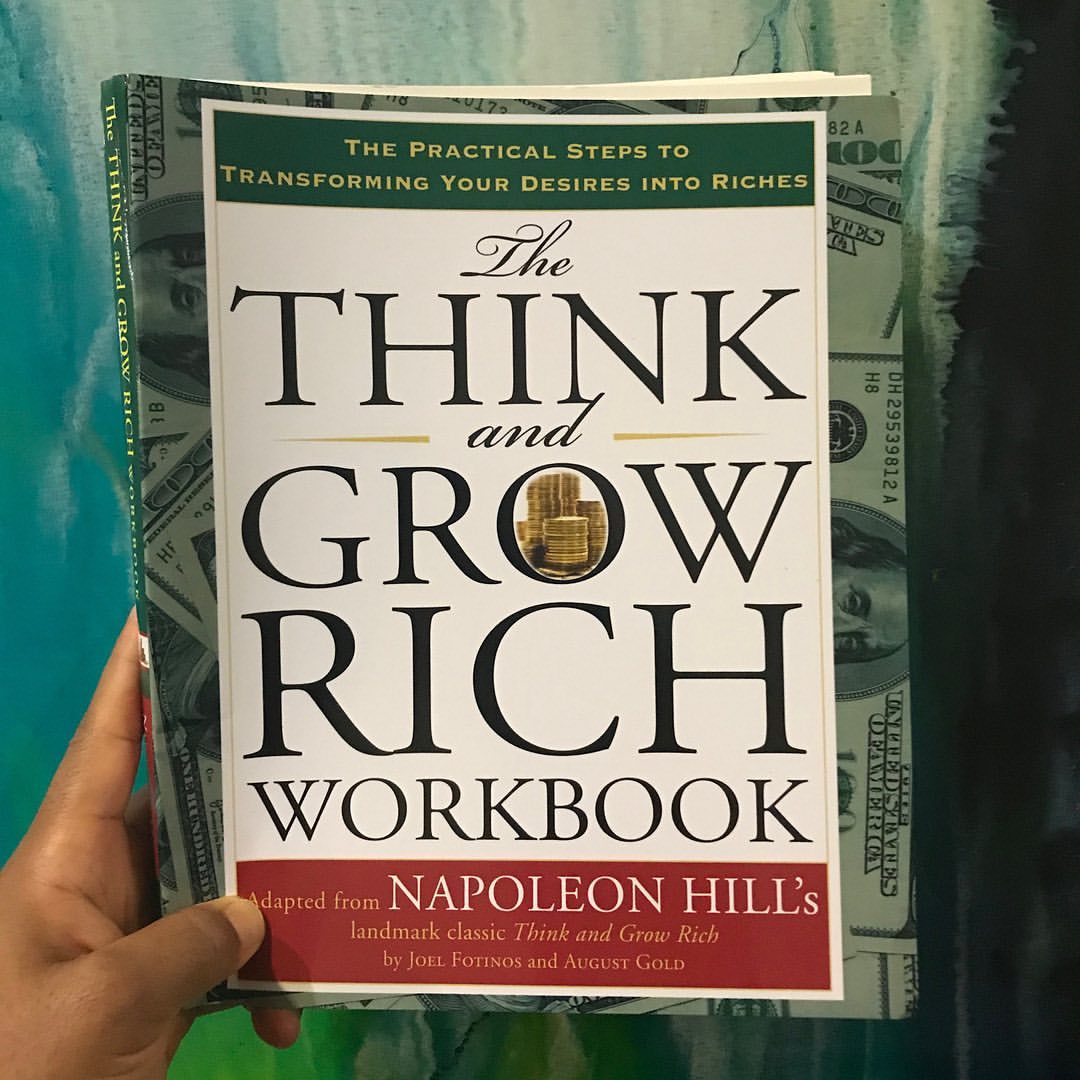
Think and Grow Rich, Napoleon Hill
“You are the master of your destiny. You can influence, direct and control your own environment. You can make your life what you want it to be.” ~ Napoleon Hill
The story goes that Andrew Carnegie commissioned a young journalist named Napoleon Hill to interview over 500 self-made millionaires over twenty years to find a definitive formula for success.
Hill outlines and details the thirteen steps to riches as listed, and they may apply to any goal or aim you have and don’t have to be monetary riches.
- Burning desire
- Absolute faith
- Auto-suggestion
- Specialized knowledge
- Imagination
- Organized planning
- Decision
- Persistence
- The power of the mastermind group
- The mystery of sex transmutation
- The subconscious mind
- The brain
- The sixth sense

For example, imagine that you have recurring negative thoughts about how you are incapable of achieving a goal. You take action, make some progress, but end up sabotaging your efforts or quitting. Why is this?
Let’s assume you have a burning desire, as well as absolute faith that you may attain your goal. Now, how are you going to program your subconscious mind and overcome negative thinking?
Hill offers a few of auto-suggestion formulas to write down and repeat aloud several times a day. They are as follows:
“I know that I can achieve the object of my definite purpose in life. Therefore, I demand of myself persistent, continuous action toward its attainment, and I here and now promise to render such action.”
“I realize the dominating thoughts of my mind will eventually reproduce themselves in outward, physical action and gradually transform themselves into physical reality. Therefore, I will concentrate my thoughts thirty minutes daily, upon the task of thinking of the person I intend to become, thereby creating in my mind a clear and mental picture of that person.”
“I know through the principle of auto-suggestion, any desire that I persistently hold in my mind will eventually seek expression through some practical means of attaining the object back of it. Therefore, I will devote ten minutes daily to demanding of myself the development of self-confidence.”
“I have written down a description of my definite chief aim in life, and I will never stop trying until I have developed sufficient self-confidence for its attainment.”
“I fully realize that no wealthy or position can long endure unless built upon truth and justice. Therefore, I will engage in no transaction which does not benefit all whom it affects. I will succeed by attracting to myself forces I wish to use and the cooperation of other people. I will induce others to serve me because of my willingness to help others.”
Ask yourself if you are genuinely willing to not only write these down but read them aloud while allowing yourself to be vulnerable to emotions when doing so, day after day.
It’s vital to point out that one must read this aloud with conviction at a minimum in the morning and, before going to bed, have a real emotional connection to what is said aloud, eventually committing them to memory. Merely speaking the words without feeling or believing them is futile.
You can see why Hill considered auto-suggestion to be the keystone step amongst them all. He wanted us to understand that our dominating thoughts shape and have shaped our lives but that we have the power to choose and reprogram our thoughts. It comes with effort as it should.
Hill also offers a list of the eleven significant leadership characteristics. Here’s a brief explanation of each.
- Unwavering courage: This comes from being and understanding the ins and outs of one’s professional responsibilities. Followers won’t follow a weak leader for long.
- Self-control: One must control themselves if they are ever going to lead others by example.
- A keen sense of justice: Followers will respect a leader who values fairness and justice.
- Definiteness of decision: A leader must not waver in decision-making. Instead, he or she should be rational, calm, and confident.
- Definiteness of plans: Put your goals in a detailed order, then work the plan. Making things up as you go along is like planning to fail.
- The habit of doing more than paid for: One of the penalties of leadership is doing more than what’s asked of your followers.
- A pleasing personality: A leader must garner respect, get along with others, and be personable.
- Sympathy and understanding: A leader must be a good listener, understand his or her followers’ problems, and offer creative or actionable solutions.
- Mastery of details: Know the intimate details and fully grasp the master plan.
- Willingness to assume full responsibility: A leader must take responsibility instead of shifting the
- follower’s blame if a follower makes a mistake.
- Cooperation: To become powerful, one must cooperate, learn to trust, and help others do the same.
- Write down which of these eleven attributes you need to improve upon and one way in which you can start right now.
- Acknowledge your imperfections and embrace a growth mindset by utilizing your self-awareness as a vehicle for improvement.
- Write down how the future version of yourself would appreciate these insights.
- Express gratitude for learning the areas you need to improve upon by writing down what you’ve learned, as well as what specific actions you will implement to enhance each characteristic.
Hill’s Thirty Major Causes of Failure:
- Unfavorable hereditary background
- Lack of a well-defined purpose
- Lack of ambition to aim above mediocrity
- Insufficient education
- Lack of self-discipline
- Poor health
- Unfavorable environmental influences during childhood
- The tendency to procrastinate
- Lack of persistence
- Negative personality
- Lack of controlled sexual urge
- Uncontrolled desire for something for nothing
- Lack of a well-defined power of decision
- One or more of the six basic fears (poverty, criticism, poor health, loss of love, old age, and death)
- Wrong selection of a mate or partner
- Over-caution
- Improper selection of associates in business
- Superstition or prejudice
- Incorrect choice of a vocation
- Lack of concentration of effort
- Indiscriminate spending
- Lack of enthusiasm
- Intolerance
- Intemperance
- Inability to cooperate with others
- Possession of power not acquired through self-effort
- Intentional dishonesty
- Vanity and egotism
- Guessing instead of thinking
- Lack of capital
Go through the list of failures and identify which ones you currently suffer from and identify ways to eliminate them. We have evolved to learn through trial and error, so understand that true failure is not trying at all.
In short, Napoleon Hill’s work is a timeless classic for a reason. It’s filled with so many key insights and actionable steps that any person can choose to implement to attain any goal or aim they choose. It is said that he dedicated over twenty years to interviewing over five hundred millionaires to get their thoughts and success processes.
There is too much value in his pages for me to try and distill every single point without diminishing the value you can get from reading or rereading it in its entirety for yourself.