
Develop Financial Literacy
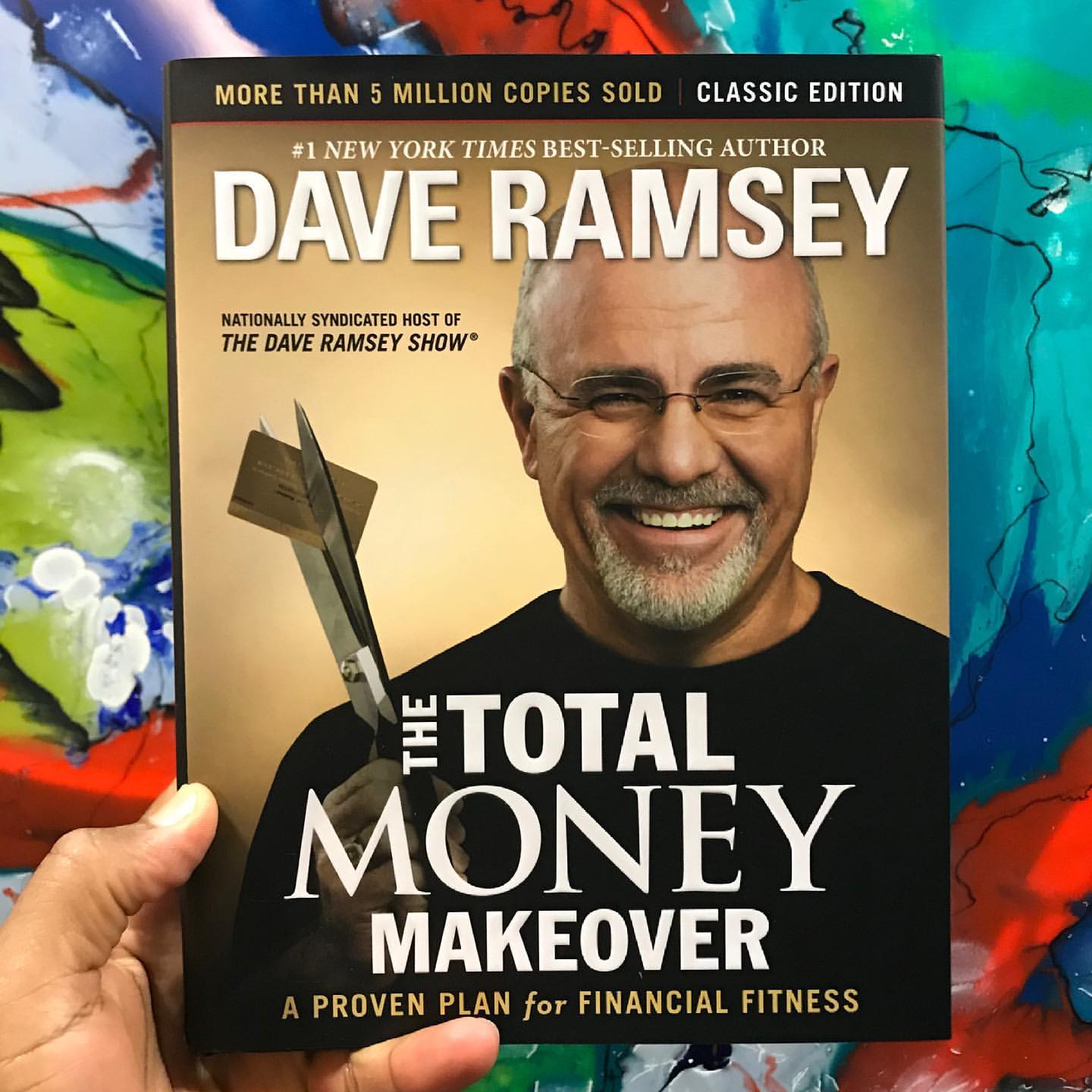
The Total Money Makeover, Dave Ramsey
Dave Ramsey provides common sense and actionable steps to take with his Total Money Makeover. Dave invites us to look within ourselves, examine our spending habits, and get “gazelle intense” to move towards financial freedom.
Here are some common myths he addresses in the chapter, Debt Is Not a Tool. How many of these resonate with you?
Myth: Debt is a tool and should be used to create prosperity.
Truth: Debt adds considerable risk, most often doesn’t bring prosperity, and isn’t used by wealthy people nearly as much as we are led to believe.
Myth: If I loan money to friends or relatives, I am helping them.
Truth: If I loan money to a friend or relative, the relationship will be strained or destroyed. The only relationship that would enhance is the kind resulting from one party being the master and the other party a servant.
Myth: By cosigning a loan, I am helping a friend or relative.
Truth: Be ready to repay the loan; the bank wants a cosigner for a reason: they don’t expect the friend or relative to pay.
Myth: Cash Advance, Payday Loans, Rent-To-Own, Title Pawning, and Tote-the-Note Car Lots are needed to help lower-income people get ahead.
Truth: These rip-off examples of predatory lending are designed to take advantage of lower-income people and benefit only the companies’ owners making the loans.
Myth: Car payments are a way of life; you’ll always have one.
Truth: Staying away from car payments by driving reliable used cars is what the average millionaire does; that is how they became a millionaire.
Myth: Leasing a car is what sophisticated people do. You should lease things that go down in value and take the tax advantage.
Truth: Consumer advocates, noted experts, and a good calculator will confirm that the lease is the most expensive way to operate a vehicle.
Myth: You can get a good deal on a new car at zero percent interest.
Truth: A new car loses sixty percent of its value in the first four years; that isn’t zero percent.
There are several more helpful reality myth-busting reality checks from Ramsey concerning credit cards, budgeting, bankruptcy, insurance, and much more. Still, I invite you to read the entire book to take them all in and apply for yourself.
Dave points out that we are not born financially literate and that trying to keep up with The Jones is fiscally irresponsible. There are also several real-life examples of people who have changed their behaviors and followed Dave’s simple formula for success, some of which were pretty dire straits.
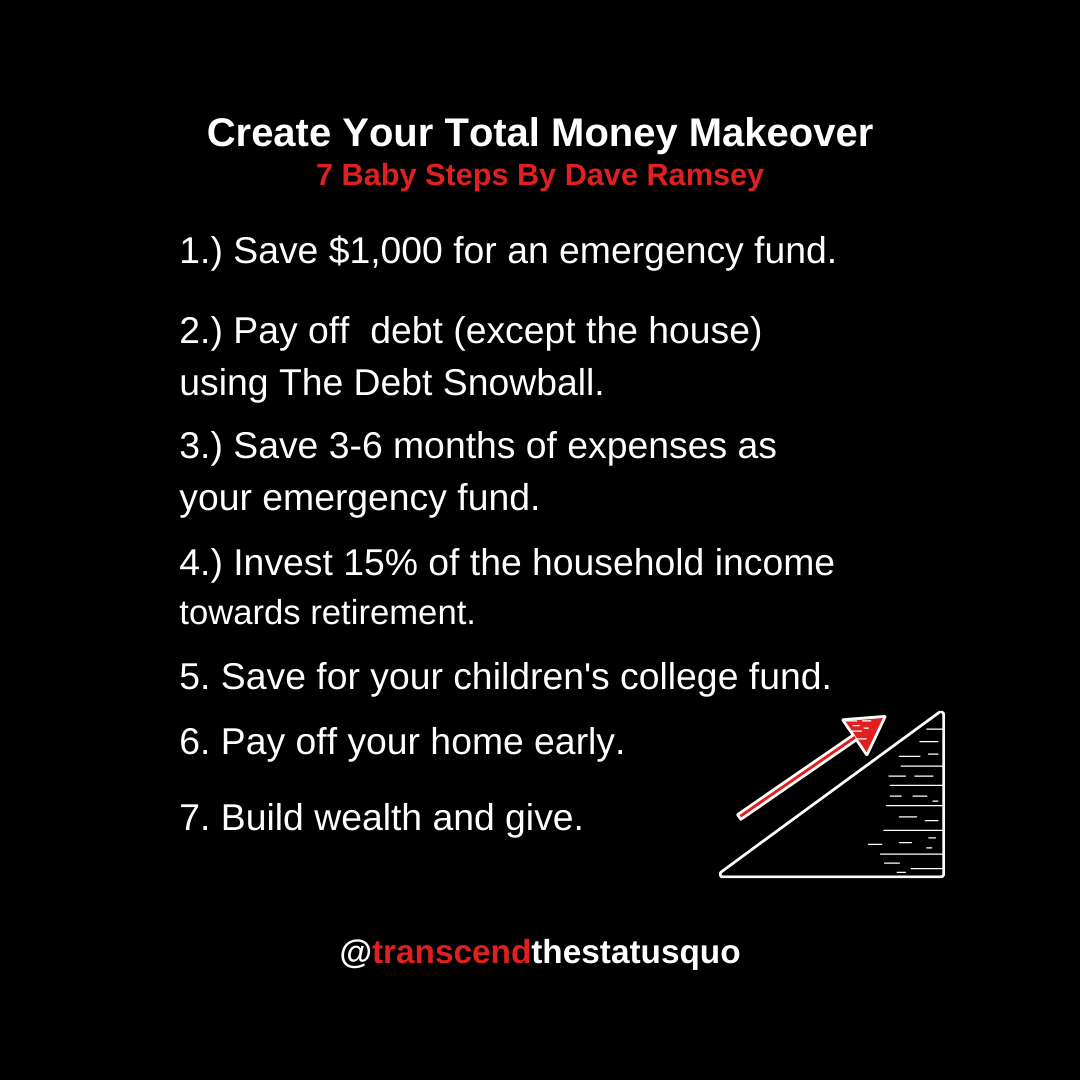
Dave Ramsey’s Baby Steps are as follows:
If you are currently in debt, you can use Dave Ramsey’s Debt Snowball, a debt reduction strategy that has worked for millions of people because it is more about behavior than simple mathematics.
First: List your debts from smallest to largest regardless of the interest rate.
Second: Make minimum payments on all of your debts except the smallest.
Thrid Pay as much as possible on your smallest debt until paid in full.
Fourth: Repeat for each debt until each debt gets paid off.
Here are some key points to keep in mind:
- You won’t solve your behavior problem with a math solution.
- Baby step number two could easily take you more than a year to complete; trust the process and be consistent.
- You will build momentum with each debt pay-off.
- You will need to get incredibly focused on working your way out of debt.
- Creating ways to earn extra money while sticking to a pre-planned budget will help you pay down debt faster.
- The simple truth is that financial freedom is possible for us if we address our behaviors, practice self-accountability, implement a solid plan, and remain disciplined. Are you up for the challenge?
Take a few moments to imagine how good it will feel once you have completely paid off all of your debts. Imagine how much easier it will be to build wealth once you don’t have any payments.
Can you even imagine it?
When that day comes for you, you can shift focus to increasing your emergency savings from one month to three to six months. From there, you can move on to investing for retirement, taking care of your kids’ college fund (if applicable), and paying off your home. The most fun part of all, build wealth and give to worthy causes, give more of your time and energy, and continue to share blessings with others as you see fit to better the lives of others.
I thoroughly enjoyed reading this book, and am following Ramsey’s baby steps, and look forward to completing them in time. Please give it a read or listen if you haven’t already.