
Master Your Mindset
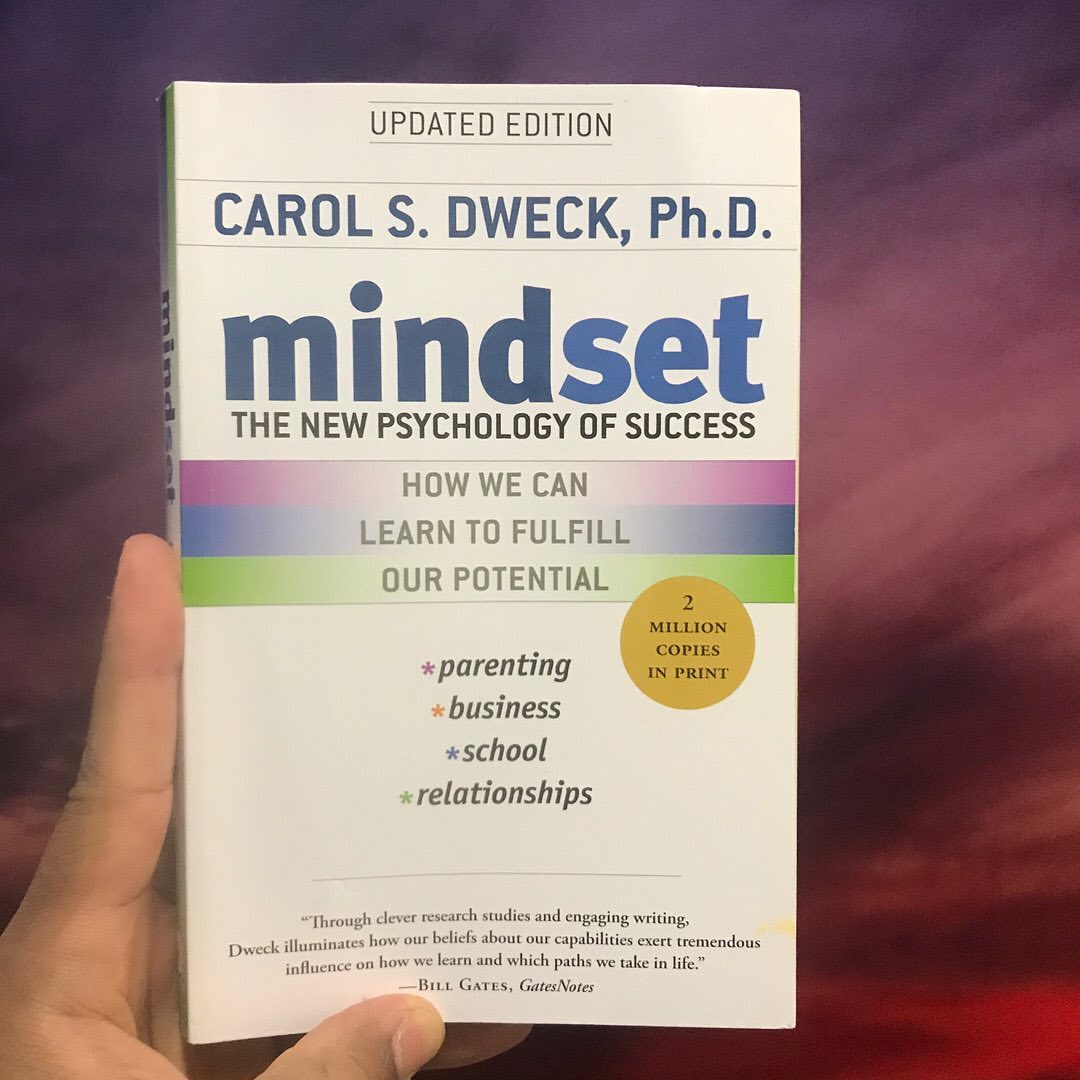
Insights from Mindest, Carol Dweck, Ph.D.
“In a growth mindset, challenges are experienced as exciting rather than threatening. So rather than thinking, oh, no, I’m going to reveal my weaknesses, you say, wow, here’s a chance to grow”.
~ Carol S. Dweck Ph.D.
“Mindset change is not about picking up a few pointers here and there. It’s about seeing things in a new way. When people change to a growth mindset, they change from a judge-and-be-judged framework to a learn-and-help-learn framework. Their commitment is to growth, and growth takes plenty of time, effort, and mutual support.” ~ Carol S. Dweck, Ph.D.
In Dweck’s book Mindset (The New Psychology of Success), she shares some beautiful insights on some common characteristics of fixed and growth mindsets, beliefs about success, failure, and effort, labels, achievement, relationships, leadership, parenting, business, and much more.
Dweck Ph.D. from Stanford University broke the book down into eight chapters:
- The Mindsets
- Inside the Mindsets
- The Truth About Ability and Accomplishment
- Sports: The Mindset of a Champion
- Business: Mindset and Leadership
- Relationships: Mindsets in Love (or not)
- Parents, Teachers, and Coaches: Where Do Mindsets Come From?
- Changing Mindsets
The Two Mindsets according to Carol S. Dweck Ph.D.
“Believing that your qualities are carved in stone–the fixed mindset–creates an urgency to prove yourself over and over. If you have only a certain amount of intelligence, a certain personality, and a certain moral character–well, then you’d better prove that you have a healthy dose of them. It simply wouldn’t do to look or feel deficient in the most basic characteristics”.
“The growth mindset is based on the belief that your basic qualities are things you can cultivate through your efforts, your strategies, and help from others. Although people may differ in every which way–in their initial talents and aptitudes, interests, or temperaments–everyone can change and grow through application and experience. The passion for stretching yourself and sticking to it, even (or especially) when it’s not going well, is the hallmark of the growth mindset. This is the mindset that allows people to thrive during some of the most challenging times in their lives”.
So how can we transition from a fixed mindset to a growth mindset?
Throughout the book, Dweck poses some excellent questions, critical insights, and frameworks we can use to improve.
Have you ever wondered if mindsets are a permanent part of your makeup or if you can change them? Can you have half of each mindset? Do people with fixed mindsets lack confidence?
In a nutshell, each of us has both mindsets. We can change our behaviors and attitudes thanks to our brains’ ability to grow stronger neural connections via neuroplasticity. According to Hebb’s law, neurons that fire together wire together. Neurons make connections with other neurons via neural branches called dendrites. When we have a thought, action, or behavior, our brain synapses send communications to various brain areas, thus strengthening signals and neural connections with continued use and challenging and meaningful tasks.
We can reinforce mindsets, behaviors, and skill sets through concerted and graded practice throughout our lifetime. In short, this is how our brain grows.
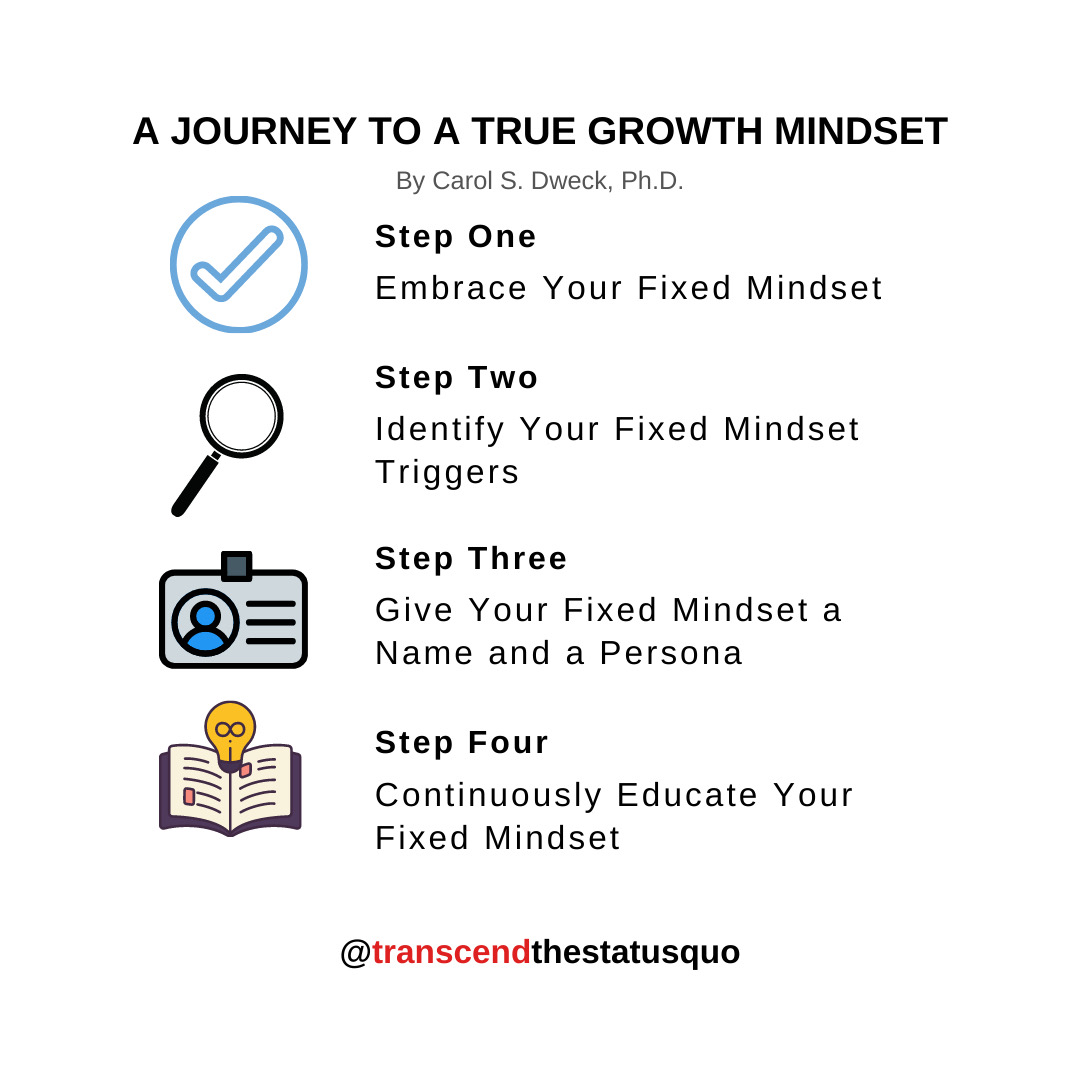
Tips for growing your mindset:
- Put yourself in a growth mindset by picturing your brain forming new connections each time you meet a challenging situation.
- Seek constructive criticism instead of followers and admirers. Focus on growth opportunities.
- When you experience a setback, look at what role you played in the situation, and look for how you could have handled things better. Always look for the lesson in every case.
- When you want to do something or have a burning desire or goal, make a plan to do it even if you have put it off because you are afraid.
- When you feel low or depressed, think about how your efforts serve to propel you in the right direction, which is a constructive force for good, not something you should feel down about.
At the end of most chapters, Dweck offers ways to continue to grow our mindset, several examples from case studies, research over decades, and famous personalities of how people think about themselves and how that influences their performance and situational outlook. The final chapter offers some excellent information about how we can learn to open ourselves to grow continuously by providing several scenarios of encounters, then comparing and contrasting what a fixed mindset approach would be versus a growth mindset.
Honestly, this is a difficult book for me to fully encapsulate, not because the information is hard to understand, it’s not, instead because Dweck shares so many insights that I want to include but can’t for the sake of brevity. It’s a beautiful book that I think you will enjoy, no matter what stage of your journey.